You're gonna love the connection to the Walnut Creek Driscoll Murders and the Murders of my relatives.
The Mysterious Death Of An Enron Exec
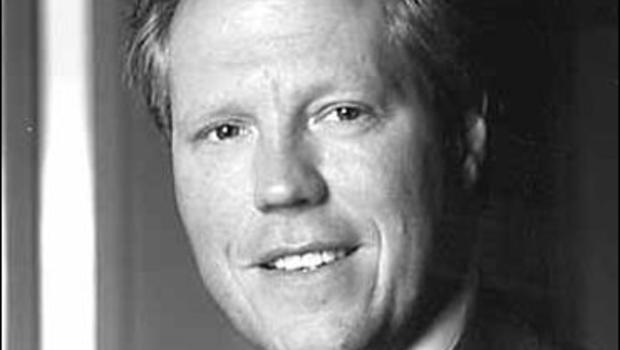
file photo of J. Clifford Baxter, a
former vice chairman for Enron Corp, who was found dead of a gunshot
wound early Friday, Jan. 25, 2002
It may be the biggest outstanding mystery in the Enron story: the death
of Cliff Baxter, a former top Enron executive. He'd just agreed to
testify to Congress in the Enron case. A congressional source tells CBS News that Baxter wasn't a target in the probe, he was to provide evidence against others.
But on the morning of January 25th he was found in his car - shot dead.
Police
were criticized for calling it a suicide before investigating, so they
kept the case open. The fact that it's still open more than two months
later has made the Cliff Baxter case prime fodder for murder conspiracy
theories, reports CBS News Correspondent Sharyl Attkisson.
Adding
to the mystery is a letter - perhaps a suicide note - that Baxter's
wife is fighting to keep private. Groups like the Texas Freedom of
Information Foundation want at least part of it made public.
"I believe very strongly that Enron is mentioned in it," said Joel White, the group's attorney.
More questions are raised in police, autopsy and lab reports obtained by CBS News.
Police won't talk while the case is open, so CBS News
asked two experts - independent coroner Cyril Wecht and former homicide
detective Bill Wagner - to review the reports. While suicide appears
likely, both experts say the documents make it impossible to discount
foul play.
Asked why he couldn't rule out murder, Wagner said,
"because murder can be made to look like a suicide. ... Someone who is
knowledgeable about forensics can very well have the ability to stage a
murder, commit a murder and stage it to look as if it was a suicide,
understanding what the police are going to be looking for."
The
experts found several things highly unusual. First the peculiar
ammunition: not regular bullets but something called "rat-shot".
"This kind of ammunition cannot be easily or readily traced back to the gun from which it was fired," explained Wecht.
"It's
not as frequently used by people for any reason. It's not the type of
ammunition one finds in guns - it has a specific purpose: shooting at
snakes and rodents in order to get a distribution pattern of the small
pellets contained within the nose portion of the bullet. It's not
something that a person is likely to have and to use if they intended to
kill themselves," said Wecht.
Other unanswered questions include
mysterious wounds on one hand and unexplained shards of glass in
Baxter's shirt. All reasons to look deeper to rule out murder.
But Wagner says glaring police errors may make it harder to close the books on the Baxter case.
First, nobody wrapped the hands to preserve evidence.
"When the body did finally arrive for the autopsy, the hands hadn't even been bagged," said Wagner.
"I'm just amazed frankly that the hands were not bagged," Wecht said.
"From what I've seen looking at the vehicle, it doesn't appear they even fingerprinted it," continued Wagner.
"The
police narrative is vague for this type of investigation. It's
important to get a timeline of the events that took place through the
course of investigation - that appears to be lacking in the original
report from the crime scene. Without that, without being able to piece
together what was done when, it's very difficult to understand the
events that took place and how they unfolded from that report," said
Wagner.
The gun and other evidence were moved before photos were
taken. The body was moved as well. There's a puzzling mention of blood
outside the car from someone laying Baxter on the ground.
Wagner
says that only should have happened if rescuers pulled him out to
revive him. But even that scenario doesn't add up - the body is back in
the car when the funeral home arrives "and that's something that is not
explained in the police reports," said Wagner.
"I think there
were some very important things omitted from the original investigation
report that should have been included in it. I would like to have known
what were the first couple things the Fire Department did to treat the
victim allegedly as he was sitting in the car and from that point how
did they change the initial crime scene. What was moved? Did they
remove the body from the vehicle? It's actually unclear how they treated
the actual scene," Wagner said.
Incredibly, even though an
autopsy is required by law, none was ordered. By the time that decision
was reversed, Baxter's body was being processed at a funeral home.
The
coroner says police still won't tell her exactly who handled and who
saw the body before it finally reached her and won't even give her
routine information.
The official finding on Baxter's death
may well end up being suicide, but for now his death certificate remains
unsigned. And at least one provocative question is left permanently
unanswered: what, exactly, Cliff Baxter would have told investigators
about the biggest corporate scandal in history.