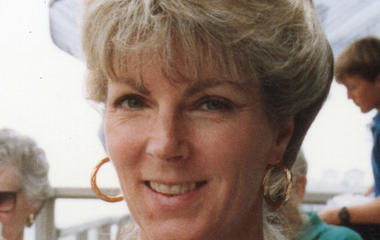
A successful wife is declared dead from nicotine poisoning - is her "Jeopardy!"-winning husband smart enough to get away with murder?
Pete Bennett: She was poisoned and he was framed, I was poisoned and almost framed. I just happen to know PG&E Attorney Howard Golub and his brother Judge Joel Golub. They both connect to former CPUC President Peevey.
Produced by Paul LaRosa, Gayane Keshishyan, Doreen Schechter and Joan Adelman
To this day, friends like Merry Seabold and Bill Sandretto can't understand why Linda Curry never left her husband, Paul.
"She's not gonna make it if she stays with him," Merry Seabold told "48 Hours" correspondent Erin Moriarty. "'Linda, I got to get you out of the house. ... Just get out of that house.'"
"I said, 'You got to get away from him. He's trying to kill you. It's obvious,'" Sandretto said. "I can't believe she wants to stay there.
Orange County Prosecutor Ebrahim Baytieh is taking on a case that's been unsolved for nearly two decades, but he believes he'll be the one to prove Paul Curry poisoned Linda with nicotine.
"There's no doubt in my mind that she loved him. She died because she loved him," Baytieh told Moriarty. "Up to the moment she died, that few minutes before midnight on June 9, 1994, in her mind ...'He's the loving husband who's holding my hand who loves me, who plays music for me-- who tells me all the nice stuff.' ...so she wasn't going to believe anything about him."
Merry Seabold was one of Linda's closest friends.
"She said, 'Oh Paul is such a good husband. He wouldn't do that,'" Seabold said of Linda.
Seabold and Linda met in the 1960s, when they both worked at Southern California Edison inside the San Onofre Nuclear Power Plant.
"It was instant bonding," Seabold said of their friendship. "She was tall, I was tall. She loved to eat, I loved to eat and we could eat in those days."
"What's the first thing that comes to mind when you think about Linda?" Moriarty asked.
"Fashionista," Seabold replied. "Always nice new outfits with shoes to match, purse to match, earrings to match, bracelets to match."
The two career women started at entry-level positions but quickly moved up.
"We were go-getters," said Seabold, "and we wanted to get ahead."
As Linda advanced in her career, moving from secretary to management, she divorced two husbands and began dating Bill Sandretto, a life insurance salesman.
"She had a great, personality," Sandretto told Moriarty. "Very loving. We went on trips together. ...We had a great time."
Linda and Sandretto dated on and off for eight years, but he didn't want to get married.
"The only thing that was bothering me was the way she spent money," he explained.
"And she would spend a lot of money?" Moriarty asked.
"She would spend it. Yeah, for every dollar she made, she spent two," Sandretto said. "I used to go crazy."
And Linda kept spending, buying herself a big house in San Clemente.
"I have never seen a more beautiful house in my whole life," said Frankie Thurber, who was a close friend and co-worker. "Linda's house was a dream house. It's where a princess would live."
Paul and Linda Curry />
And Linda thought she had met her prince when she started dating Paul Curry in 1989. He was 32 and she was 45.
"...they would talk their little baby talk ... The little nicknames. It was a little bit sickening," Seabold said with a laugh.
Curry was hired as an engineer to consult at Southern California Edison, teaching the power plant's nuclear engineers about safety issues.
Mike Flower was Curry's boss.
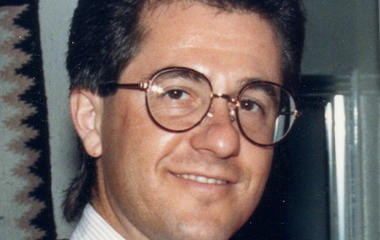
"Paul had a sterling reputation. He was extremely smart," Flower said. "The only real complaint most people had with Paul was that he was too smart."
"But when people would say he's too smart, was that because he's arrogant too or just because he showed everybody else up?" Moriarty asked.
"He let people know, but in a playful way," said Flower.
"I thought that he was very egotistical," said Thurber.
Curry bragged about winning thousands on "Jeopardy!" in the 1980s, and being a member of Mensa, the international society of people with high IQs. But that didn't bother Linda.
"He thought highly of himself, there was no doubt about it," Seabold said. "He liked to take over the conversation and kinda talk over her. And -- and she would sit back and allow it because, again, she liked showing his intelligence off."
Linda had some reservations about Curry, but the two got married on Sept. 12, 1992, three years after they began dating.
Asked if it was a passionate relationship, Seabold told Moriarty, "I don't think passion played into this relationship. ...I think it was a comfort. But it wasn't passion. It wasn't passion."
"It wasn't looks. ...It wasn't money," Baytieh explained. "It was the idea that, 'I am with somebody who is so brilliant.'"
Linda also wondered why her much younger new husband seemed so "uninterested."
"How did you know that they weren't having any sex?" Moriarty asked Sandretto.
"She told me," he replied.
And then there were the money issues. Paul and Linda had combined annual salaries of at least $140,000, but Linda noticed she had less money than ever. The reason soon became clear: Curry was helping to support two ex-wives and three children -- families he'd kept hidden from Linda.
"It was just those little lies that just kept coming up," said Seabold.
 48 Hours Segment Extras
Two sides of Paul Curry
Lies and suspicious behavior, like a $1 million life insurance policy Curry asked Linda to buy making him the beneficiary.
"They had been married maybe a month and she called me one night and says, 'You know Merry, Paul wants to take out a million-dollar life insurance policy on me, what do you think?" Seabold said. "'Are you crazy? Are you kidding me, why would you do that?'"
"He comes into this marriage with practically nothing ... and she's got a beautiful house, beautiful furniture, beautiful clothes, wonderful circle of friends," Seabold continued. "And what is he bringing to the table? And now he wants a life insurance policy on her for a million dollars? Red flag."
Linda never got that extra policy, but it hardly mattered because, as Curry knew, Linda already had several life insurance policies worth almost a million dollars and Curry was named the beneficiary on some of them.
"I said, 'Get him off ... You need to change your life policy right away,'" Sardetto warned Linda. "That's when she told me, she said, 'I'll give it to you.' And I said, 'No, don't give it to me. Give it to your sister.'"
But Linda, who had been married just half a year at that point in 1993, was torn. So she asked Frankie Thurber, who was then looking for an apartment, to temporarily move into the Curry house and spy on Paul.
"...she was afraid that Paul didn't really love her and she said, 'Frankie, would you do me a favor? Would you watch Paul and see if you think he's genuine with me that he really cares about me?'" Thurber explained. "And that's when I started watching every move that he made, basically.'"
Thurber didn't see anything wrong; in fact, quite the opposite.
"And I went back to her and I said, 'Linda, I, I watched everything, I, I don't see it. He dotes over you. He loves you. He can't do enough for you. I don't know why you would be questioning that,'" she said.
Even Merry Seabold, never a big fan of Curry, was impressed by the way he pampered Linda.
"He would prepare these exotic, wonderful new salad dressings as a test and then send her upstairs for a hot bath," she said.
"Every night he would draw her a bubble bath. I mean huge bubbles. I said, 'Linda, I would kill to have somebody draw me a bubble bath. Of course he loves you,'" said Thurber.
In July of 1993, just short of her first wedding anniversary, Linda came down with a mysterious illness.
"She said, 'I just don't feel well. I just don't feel like myself,'" Thurber said. "And she couldn't figure out why all of a sudden she'd get sick."
Linda became so violently ill that she needed to be hospitalized.
"When I saw Linda in that bed, honest to god, she looked like an 80-year-old woman," Seabold said. "Her organs were failing ... they said they didn't even know if she's gonna make it that night."
A MYSTERY ILLNESS & RED FLAGS
It was July 1993 when Linda Curry was rushed to Samaritan Medical Center in San Clemente.
"Linda Curry came in with gastrointestinal problems," Registered Nurse Sherry Bundy said. "I was assigned to take care of her that evening ...She was nauseated. She had some vomiting ... I checked her IV."
Bundy says the IV drip was for hydration. While checking it, she noticed something odd.
"There was an overhead light ... and I could see the IV bag was cloudy because of the light shining behind it which I knew was not right," she said.
"How unusual is that?" Moriarty asked.
"It's very unusual," Bundy replied.
Bundy reported the incident to hospital brass and the bag was sent to the lab.
Among Linda's visitors was Bill Sandretto, her former boyfriend.
"'Oh, my God, Linda,'" Sandretto said. "She was just emaciated, you know."
"What was the cause of this?" Moriarty asked.
"They didn't know at the hospital," said Sandretto.
Poisoning was suspected. Linda was hospitalized for 21 days. She had a stroke and nearly died. And then lab workers discovered lidocaine, a numbing agent, in the contaminated IV bag and reported the incident to the police. They began an investigation that focused on one person: her husband, Paul Curry.
"This is what's so fascinating about this case. He was a suspect in poisoning her before she died," said prosecutor Ebrahim Baytieh.
Back then, Baytieh was still in law school. But eventually, in 2006, the case landed on his desk at the Orange County District Attorney's Office. He was surprised to find detectives at the time had audiotaped their interviews with Linda.
"These are the old microcassettes that they used back in the early to mid-90s," he said, showing Moriarty the tapes. "Very unusual to have a case where you had investigators ask the victim, who ends up getting killed, about the conduct of the person who killed them."
[Aug. 11, 1993 audiotape interview]
Detective: Paul is your husband?
Linda Curry: Uh huh.
Detective: And how long have you been married?
Linda Curry: Not quite a year.
Police investigators interviewed Linda in her hospital bed in August 1993, and zeroed in on the key question:
[Aug. 11, 1993 audiotape interview]
Detective: If somebody were trying to do something to you, if they were trying to poison you, any idea who would try to do that?
Linda Curry: Well, the only person I could think of that would have a motive to do it would be Paul and the only motive I can think of is money but I don't want to really even believe that or think that.
Linda was candid with detectives, admitting that her new husband was sneaky about money issues and had lied about his past marriages and children. Still, there was one very big "but":
[Aug. 11, 1993 audiotape interview]
Detective: Do you still love Paul?
Linda Curry: Yeah, I love him very much.
Detective: Do you believe he loves you?
Linda Curry: I want to believe that he does. He certainly is convincing.
"Her friends were telling her, 'Run.' Her co-workers were telling her 'run,'" Baytieh said. "You take all that, and she's saying, 'But he loves me and he takes care of me. And I like how I'm feeling because of what he's saying. And I like how I'm feeling because of what he's doing.' And she doesn't run away. She stays."
Linda stayed with Paul Curry and recovered. In the meantime, the police investigation went nowhere. Then, just five months later, in December 1993, she was again hit with the mystery illness. This time, Curry took her to a different hospital, but the story was much the same.
Linda's friend, Merry Seabold, was very concerned.
"She looked like death warmed over, something's happening to her. They don't figure out what it is. I didn't know if she was even going to make it," said Seabold.
"And how is Paul acting through this?" Moriarty asked Seabold.
"Caring and involved," she replied.
But Linda told Seabold that her IV bag had been tampered with yet again. An alarm had gone off soon after a nurse reported seeing Paul Curry leave Linda's room. This time, the hospital staff put a clear sign on Linda's door.
"It would say, Mr. Curry or husband is ... not allowed unaccompanied into the hospital room," Seabold said of the sign.
"What did you think when you saw this sign on the door?" Moriarty asked.
"Well, I knew that other people had a suspicion that perhaps Paul was doing something to his wife," Seabold replied.
In fact, the police were again called and did a second audio-taped interview. Linda told cops that Paul was running up high credit card bills, but she still remained fiercely loyal:
Linda Curry interview: He's a wonderful man. I love him and he's always been good to me.
The next day, detectives interviewed Paul Curry, but he stuck to his story that he had no idea why Linda was getting sick:
Paul Curry interview: I was completely befuddled when doctors couldn't solve the problem, I couldn't solve the problem...
With Linda still in the hospital, Seabold found documents in the Curry house that fueled her suspicions about Paul.
"On the highboy dresser, as I walk into the room, there's a bunch of papers. Well, I just kind of glanced at them, but in big script writing, I saw the word, 'Life insurance' in gold writing. And I went, 'Oh, life insurance.' And then I went, 'Oh, more life insurance policies. Oh, they're all here. They're all out on this highboy dresser, on the top of it.' Now, all the red flags are adding up to crimson. I mean ... it's really red now," she said.
Seabold questioned Linda after she was released from the hospital.
"I'm asking her, 'Did ... you have those things out, Linda? Is this something you're looking at?' Well, she hadn't been home. No, not at all. I said, 'Linda, Linda, put it together. Put it together and let's -- let's talk about what's goin' on there.'"
Seabold warned Linda that she believed Curry was getting ready to cash in by killing Linda.
"She said, 'You're right. There's something going on and I need to get outta here.' The next day it was like the door slammed on me and she said, 'No, Merry, no. No, I -- I can't. I -- I can't leave Paul," said Seabold.
"Did she say the reason why she couldn't leave is because she didn't believe that he would do this?" Moriarty asked.
"You know, she was in such denial," said Seabold.
Six months went by, and then, on June 9, 1994, Seabold received an email from Paul Curry that said Linda was feeling worse than ever.
"I said, 'Linda Curry's gonna die. Paul's gonna finally get to poison her and ... she's gonna die,'" she told Moriarty.
That very evening, sometime around midnight, Curry says he awoke to find Linda barely breathing.
"Linda did not respond. He calls 911, gives her CPR. Paramedics arrive. No heartbeat, no pulse. Take her to the hospital. She dies," said Baytieh.
Nurse Bundy heard the news the next day when she reported to work at Samaritan Hospital.
"My first thought was, 'He finally did it,' and my second thought was somebody really dropped the ball,'" she told Moriarty.
A FRESH LOOK AT A COLD CASE
One of the first to hear of Linda Curry's death on that June night in 1994 was Paul Curry's good friend and boss, Mike Flower.
"I received a phone call about 1:00 in the morning on the night of her death," Flower said. "'Can you come to the -- the home of Paul and Linda Curry?' And I said, 'I'll be right there.'"
"What did you think?" Erin Moriarty asked.
"Linda was dead," he replied.
Like everyone who knew the couple, Flower was aware that Linda had been sick. He rushed to the Curry home in San Clemente.
"Paul was very emotional. He cried on my shoulder for hours," said Flower.
"And what did he tell you had happened?" Moriarty asked.
"'I can't believe she's gone,'" he said.
The next day, word spread to Linda's good friends Bill Sandretto and Frankie Thurber.
"Her sister called me," Sandretto said. "I said, 'Oh, my God.'"
"I said WHAT? She was like a sister to me, she just was -- almost even like a mother to me," said Thurber.
Merry Seabold heard the news from her husband.
"I ... knew that ... all my premonitions were true. I knew that it was Paul and I knew that -- no one could save her," she said.
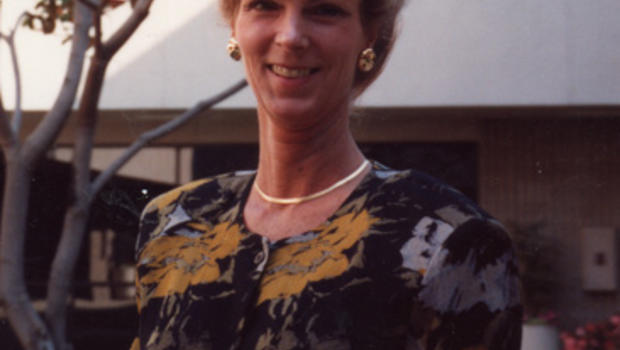
25 Photos
Timeline: Investigating the death of Linda Curry
Linda's friends wondered if Paul had poisoned her by putting something in his special salad dressings and all those bubble baths.
"He knew everyone was looking at him as a suspect. Didn't you, like, think, no way would this guy actually kill her when he knew he'd be the first suspect?" Moriarty asked Seabold.
"You know, he was such a con man and -- and such a narcissist and such a psychopath," she said. "I just think he thought ... 'I am so much smarter than anybody, I can do this.'"
"Paul Curry knew that there is no way he could murder his wife and not be a suspect," Baytieh said. "His objective was not to eliminate himself as a suspect. His objective was to make sure he doesn't get charged with the crime."
During the autopsy, the medical examiner found an unusual mark behind Linda's right ear that could have been left by a syringe. Then, toxicology reports revealed what Linda's friends had long suspected -- she had been poisoned and now they knew the cause: nicotine, a lot of nicotine.
"She died from a massive nicotine poisoning. ...Catastrophic levels of nicotine in her system," Baytieh explained. "People say, 'Well, maybe she's a smoker. ...No, she's not a smoker. She doesn't smoke."
"It's not possible she could've gotten that amount of nicotine over a period of time, building up in her system" Moriarty asked.
"Absolutely not," said Baytieh.
The toxicology reports also revealed the presence of a large amount of the generic form of Ambien, a sleeping medication, in Linda's body. Her death was declared a homicide, but there was no evidence to connect Paul Curry to the nicotine, the sleeping pills or a syringe ... so he could not be charged.
"The fact that he wasn't charged with a crime wasn't because somebody dropped the ball. It's because he was able to cover his tracks," said Baytieh.
Curry was about to get away with murder -- free to start a new life and to claim the money from Linda's estate.
"He's told people he's gonna get a million dollars out of it, that was his plan," said Baytieh.
Not so fast. As it turns out, Linda had drafted a handwritten note giving her sister approximately half her estate. Curry was apoplectic.
"After he found out that things weren't as easy to get all the money and he called me and he said, 'D-- did you know --d - d - did -- did-- did you know anything about -- about Linda changing and -- and her - and -- and-- and her sister, Pat, is gonna get s - her --,' and he was, like, stuttering," said Seabold.
But incredibly, despite all of Linda's suspicions, she remained faithful to Paul even in death. She left him her house and close to half-a-million dollars "so he'll be OK," Linda wrote in the note about her estate.
"If she thought he was killing her, why would she want to leave him money?" Moriarty asked Baytieh.
"Because she never allowed herself to believe what was obvious to anybody and everybody," the prosecutor replied. "And that's the power of the heart."
After Linda died, Paul Curry was transferred from his old job at the nuclear power plant. That's when a routine security check revealed a pack of lies in his resume. He was not an engineer; he didn't even have a college degree. The brilliant Mensa member who trained nuclear engineers was a complete fraud.
"So I called Paul up at the end of the day, and I said, 'Paul, I'm coming in tomorrow morning at 8:00, and I'm gonna fire you unless your resignation is on my fax.' And I came in the next morning and his resignation was on my fax," he said.
But thanks to Linda, Paul Curry collected $419,000 from two of Linda's life insurance policies and her retirement plan. He also began collecting her retirement benefit of $564 every month. But even with all that money, he let Linda's beloved house slip away.
"He let the house go into foreclosure," Thurber said. "And ... he got outta Dodge and went to Vegas. And I understand that he got a job as a used car salesman, which I found quite intriguing because a con artist is a really good car salesman."
But it wasn't long before Curry conned his way into a new job, this time becoming a building inspector. Years went by and the police investigation into Linda Curry's murder came to a complete standstill. The case badly needed a fresh set of eyes.
Sgt. Yvonne Shull of the Orange County Sheriff's Department was working in the cold case unit when she inherited Linda Curry's murder from a retiring detective. She immediately focused on those old audiotaped interviews of Linda:
[Aug. 11, 1993 audiotape interview]
Detective: If somebody were trying to do something to you, if they were trying to poison you, any idea who would try to o that?
Linda Curry: Well the only person I could think of that would have a motive to do it would be Paul.
Sargeant Shull began digging into Paul Curry's background.
"I started with, who is Paul Curry?" Shull said. "Everywhere I looked about Paul Curry, it was false. It was fake."
For four years, Shull re-examined the entire case and re-interviewed witnesses. She enlisted the help of Detective Mike Thompson, who was an expert at following money trails.
Thompson looked carefully at all of Linda's insurance claims and also an insurance claim filed by Curry in the days after Linda died. In that report, Curry claimed someone had stolen Linda's 18-karat gold Ladies Presidential Rolex and some other jewelry. He wound up collecting more than $9,000 on that claim.
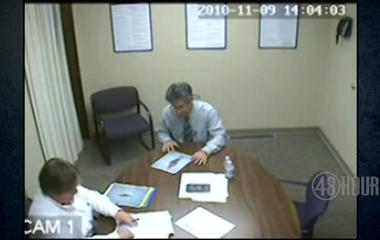 48 Hours Segment Extras
Detective grills murder suspect about dead wife's "stolen" Rolex
The more Thompson looked at the case, the more he was convinced Curry murdered his wife.
"This isn't an accident. This isn't an oops. It's not a suicide. It's a homicide," he told Moriarty. "He's being a loving husband to his wife, 'Oh, honey, I'm sorry you're so sick.' And in the back of his mind, he's gotta be thinking, 'How is she not dead?' How much of this nicotine do I got to give her to kill her for crying out loud?!'"
In 2006, four years after Sgt. Shull picked up the Curry case, she had enough to take it to Baytieh.
"She says, 'You know, I have this cold case that I've been working on," Baytieh said. "So I said, 'Bring me the file.' ... She comes back a few hours later with about 25 binders."
Baytieh plunged in, studying the case for three years until 2009, when he reached out to the nicotine expert who had been hired years before to analyze Linda Curry's blood -- Dr. Neal Benowitz.
"And I said ... 'Do you remember that case?' It didn't take him long to remember, 'Oh yeah, I remember that high level,'" said Baytieh.
And what Dr. Benowitz had to say shocked Baytieh.
"He said all he needed to do is to go into a grocery store and buy a pack of cigarettes," he explained.
OUTSMARTING PAUL CURRY
Dr. Neal Benowitz, professor of medicine at the University of California, San Francisco, is one of the country's preeminent experts on nicotine.
"How often have you seen nicotine used as a murder weapon?" Erin Moriarty asked.
"Never," he replied with a laugh. "I've read about it but I've never seen it."
"Until now?"
"Until now, yes," Dr. Benowitz said. "This was beyond anything we've ever measured ... levels four or five times higher than anything we'd ever seen before."
Crimesider: Killer poison -- Nicotine as a murder weapon
Even after two decades, Benowitz remembers the Linda Curry case because of the "catastrophic" levels of nicotine discovered in her body back in 1994.
"How do you believe she had to have gotten that nicotine?" Moriarty asked Dr. Benowitz.
"Well, I think most likely it was by an intravenous injection," he replied.
It's the only possible explanation says Dr. Benowitz. And remember, the medical examiner did find a puncture mark behind Linda's right ear.
"Can you say how soon she had to die after she got that dose of nicotine?" Moriarty asked.
"It was my thought that death must have been within 20 or 30 minutes," said Dr. Benowitz.
Dr. Benowitz says he does not remember discussing that time frame with the original investigators 20 years ago. But now, says Prosecutor Ebrahim Baytieh, that one fact turns the entire case.
"The nicotine was introduced into Linda's system during this time frame. And the only other human being who had access to her is Paul Curry," he said.
Curry's story has always been that on the night Linda died, the two of them were home alone for approximately six hours. Baytieh believes Curry injected Linda after knocking her out with a heavy dose of Ambien.
"I think ... she comes home. ...He introduces Ambien into her system, whether it's by way of food or a drink or a salad or one of his fancy dressings. When she's out, when she's sedated, he takes that syringe that he had ready with nicotine," Baytieh explained. "He injects her with the nicotine and he waits until he is sure that she's not gonna survive this one."
But where would Paul Curry get so much nicotine? The answer is frightening -- Curry only needed to buy a pack of cigarettes.
"If you buy a pack of cigarettes ... you can have 300 milligrams ... of nicotine," Dr. Benowitz explained. "And that's way above the lethal dose for a person."
The case was rounding into shape, but Baytieh wanted more. Sgt. Yvonne Shull tracked Curry to Salina, Kansas, where he had a new wife, a new son and a new job working as a building inspector. Finally, Curry would have to answer some tough questioning and Shull was ready to take him on face to face.
"I was afraid that if ... we told him we were from Orange County, that he wouldn't talk to us," Shull told Moriarty.
So Prosecutor Baytieh came up with a plan to trick Paul Curry into believing he was being questioned by two local detectives who had no knowledge of the case. Shull would be playing the part of "Marie."
On Nov. 9, 2010, the Salina police chief tells Curry that Orange County investigators are just trying to "close out a death investigation" and so they requested Salina detectives to ask Curry a few questions.
"The chief of police said, 'Oh, he's a building inspector. He's very smart. He's never gonna talk to you,'" said Shull.
"What was your reaction when he said yes? Were you shocked?" Moriarty asked.
"I couldn't believe it. I thought to myself, 'Well, he's not as smart as he thinks he is,'" she replied.
Det. Furbecks: I guess this involves something with a woman named Linda.
Paul Curry: That's my -- my ex-wife -- I mean my ex-marriage. She passed away.
"We go into that interview and our plan was for the first part of it let him think he is in complete control," Baytieh explained. "So he's thinking, 'I'm gonna absolutely run circles around them because they don't know anything about the case, and they're from Kansas, I am smarter than they are.'"
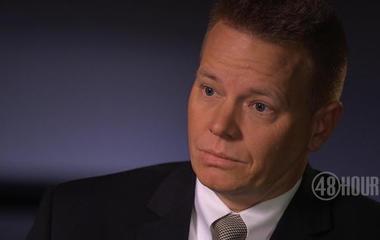 48 Hours Segment Extras
"He's very cunning" detective says of Paul Curry
But then, Shull takes over and the meandering interview becomes a targeted interrogation:
Sgt. Shull: The night that Linda passed away, you and Linda were alone, correct?
Paul Curry: Right
Sgt. Shull: Was there anybody else in the house?
Paul Curry: No.
Shull is locking Curry into the story that he's told all these years, leaving him no room to back away from it later:
Sgt. Shull: So nobody snuck into the house?
Paul Curry: No.
Sgt. Shull: there was no burglary in the house?
Paul Curry: No.
Sgt. Shull: There was no robbery at the house, nothing like that?
Paul Curry: No.
Sgt. Shull: It was just you and Linda?
Paul Curry: Yes.
He has now boxed himself in and Shull gives it to him straight:
Sgt. Shull: Paul, I believe that the cause of Linda's illnesses and the cause of Linda's death are at your hands and before I ask you any other questions, I feel like I need to read you your rights. Paul Curry: Are you arresting me?
No arrest yet, but for such a smart guy, Paul Curry does not do the smart thing -- he keeps talking:
Sgt. Shull: Were you slowly poisoning her?
Paul Curry: No. Sgt. Shull: No.
Paul Curry: Of course not.
Sgt. Shull: No.
Despite the grilling, a detached Curry seems to have other things on his mind. And when Shull leaves the room briefly, Curry shows his impatience:
Paul Curry: Should I presume that I'm not going to make my 4 o'clock meeting today?
Det. Furbecks: Yes.
Paul Curry: And why is that?
Det. Furbecks: I don't know how long this is gonna take.
Paul Curry: Well, what is this, that is taking ... does this trump my obligation to my employer? ...This is going to be awfully hard to explain professionally.
That's the least of Curry's worries:
Sgt. Shull: At this point Paul you are not free to leave. I am placing you under arrest for the murder of Linda Curry ... My name is Yvonne Shull, my middle name is Marie.
Finally, 16 years after Linda's death, Paul Curry is called to account for her murder.
"It felt great to pull out my badge and ID and introduce myself to him. And tell him I was from Orange County and I was there to arrest him. It felt great," Shull told Moriarty.
But the arrest is just the beginning. Baytieh still has a case full of holes.
"Even up to today, there's no smoking gun," he said.
"Or a smoking syringe?" Moriarty commented.
"Or a smoking anything!" said Baytieh.
THE TRIAL OF PAUL CURRY
"He's a monster, a monster who picked his prey and it was my best friend Linda," Merry Seabold said of Paul Curry.
"He's a liar. How can you live with yourself taking this beautiful, beautiful woman and setting her up to die?" said Frankie Thurber.
It took 20 years, but in September 2014, Assistant District Attorney Ebrahim Baytieh finally has Paul Curry right where he wants him -- in front of a jury on trial for the murder of his wife, Linda.
"In this courtroom sits a vicious, cold-blooded murderer, make no mistake about that," Baytieh addressed the court. "He thought he was smarter than everybody else ... she died from nicotine poisoning."
Baytieh admits the case is no slam dunk.
"I've had cases where people confess. I've had cases where people say, 'Yep, I shot the victim.' ...Do I have that in this case? Absolutely, not," Baytieh told Moriarty.
"My obligation is to prove it to you beyond a reasonable doubt," Baytieh told jurors.
Defense attorney Lisa Kopelman wastes no time pointing out the lack of direct evidence connecting Paul Curry to the murder of his wife.
"You are never going to hear about how exactly Linda Curry died," Kopelman told the court. "You're never going to hear where the nicotine came from, how it got into her. ...This is a case ... based on suspicion, innuendo, and conjecture."
Curry is charged with first-degree murder for financial gain, which carries a mandatory life sentence with no possibility of parole.
"This defendant is as guilty as sin," Baytieh told jurors.
No surprise, the defense sees things differently.
"He is an innocent man. The prosecutor uses the word murderer, murderer, murderer," Kopelman said in court.
Kopelman belittles the case against Curry, questioning those hospital IV bags that appeared to have been tampered with.
"Come on, this is baloney," she told jurors. "There was no poison ever found in any of those IV bags, there was no fingerprints on it."
Instead, she tells the jury that Linda had a history of stomach problems dating back to the late '60s, long before she met Paul: "Throughout those years, she went to many, many doctors."
"All that history is not going to create nicotine in her system out of nowhere," Baytieh told Moriarty.
The defense argues that Linda was so desperate for a cure that she gave herself an unorthodox remedy - a nicotine enema - and it wound up killing her.
"One way it got in there was this, through her colon from a nicotine enema," Kopelman told jurors.
Baytieh can barely contain himself. "It's the enema defense. It's the enema defense," the prosecutor told the court.
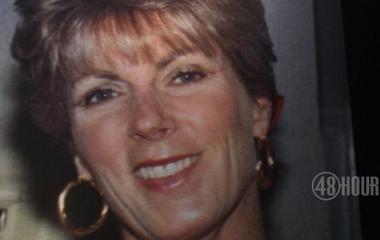 48 Hours Segment Extras
Defense: Linda Curry caused her own death
There is no evidence Linda ever gave herself an enema, Baytieh says, and even if there was, it would not explain the undisputed toxic levels of Ambien in Linda's system.
"Where did that Ambien come from? ... I'm gonna show you. Follow my finger. Right there. That murderer sitting right there," Baytieh said as he pointed at Curry.
"Do you have any evidence he obtained Ambien? Did he have a prescription? Did she have a prescription?" Moriarty asked Baytieh.
"The answer to your question is no, no, no, no," he replied.
The only pertinent fact, Baytieh says, is that Linda died that June night within 30 minutes of getting that one lethal dose of nicotine and that Paul Curry was the only person who could have administered it.
"Nobody, other than this defendant, had access to Linda in the six hours before her murder, nobody," Baytieh told jurors. "The defendant had all the motive in the world to murder her, all of it, all of it. He had to cash that check. He had to cash that check. She had to die."
Paul Curry never takes the stand to explain himself, but Baytieh has a surprise in store.
"One of the better witnesses that I had is the one that I wasn't able to get to take the stand, Paul Curry, because the day after I signed that piece of paper to get him arrested and he's in custody ... he talks to his current wife then. He's on the phone telling her about what he thinks about our evidence," Baytieh told Moriarty.
The jailhouse phone call was recorded by authorities and Baytieh plays it for the jury:
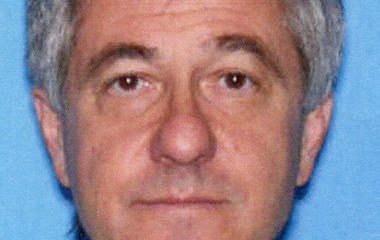 48 Hours Segment Extras
Jailhouse phone call: "I'm in big trouble"
Paul Curry: Hey. I'm in trouble. I'm under arrest. I'm in jail.
Teresa: Tell me what's going on. I don't understand.
Paul Curry: I'm in big trouble ... I gotta tell you, it looks bad....I mean, other than the fact that there's no physical evidence that I did it and I didn't do it ... they could put me away to prison ... they're serious about this.
With Paul Curry's own words ringing in their ears, jurors get the case.
"For me, when a jury starts deliberating, this is when I realize there is nothing else that I could do," said Baytieh.
The jurors deliberate for a day and a half before reaching a verdict. Sgt. Yvonne Shull, who brought the Curry case back to life in 2002, heads back to the courthouse.
"Either guilty or not guilty, I didn't think it was gonna hang," Shull said. "I watched the jury come in. And they wouldn't look at me, where previously they would look at me and so I was afraid."
"I was holding one of Linda's earrings. And our other good friend ... was next to me. And I gave her one of Linda's earrings, and we just held hands and held her earrings in our hands," Seabold said of awaiting the verdict.
The verdict: Curry is found guilty of murder for financial gain.
"What did you feel?" Moriarty asked Baytieh following the verdict.
"Peace," he said. "I wish it was 20 years earlier 'cause he got to enjoy 16 years of freedom."
48 Hours Segment Extras
Remembering Linda Curry
But even the guilty verdict does not answer the ultimate question: why did Linda stay with Paul?
"She didn't want to admit failure," Thurber said. "...after you've waited that long and you've gone out with that many men, you don't want to admit that you chose the wrong guy."
"They're really hard to look at because they remind me of obviously my best friend," Merry Seabold said, looking at photos of Linda. "I miss her so much. Because you don't just meet friends, you get 'em for 25 years and then lose 'em. ...And so I'll see her again. I'll see her again.
In her will, Linda Curry left $10,000 each to 10 special friends, including Merry Seabold and Frankie Thurber.
© 2015 CBS Interactive Inc. All Rights Reserved.





![GasCanMan-mcfadden-golub-darbee-peevery[2]](https://blogger.googleusercontent.com/img/b/R29vZ2xl/AVvXsEh-CB6ar3kZAML-tPZhOwNQ6SDoaqplgpfRyV3-UZquNts3XcmqOcZIptvA6PeqLtrLxvPBCc6TxS8UbyECVQ96r0vL8nObl1NB2nZXkN-2ZOHscrRSvW_6jnfF55VtYKUp-bx5AkOuP_ddlg4/s1600-h/GasCanMan-mcfadden-golub-darbee-peevery%25255B2%25255D%25255B2%25255D.jpg "GasCanMan-mcfadden-golub-darbee-peevery[2]")